The FIASCO Project
Why Snail Population (Littorina saxatilis) Fail to Thrive?
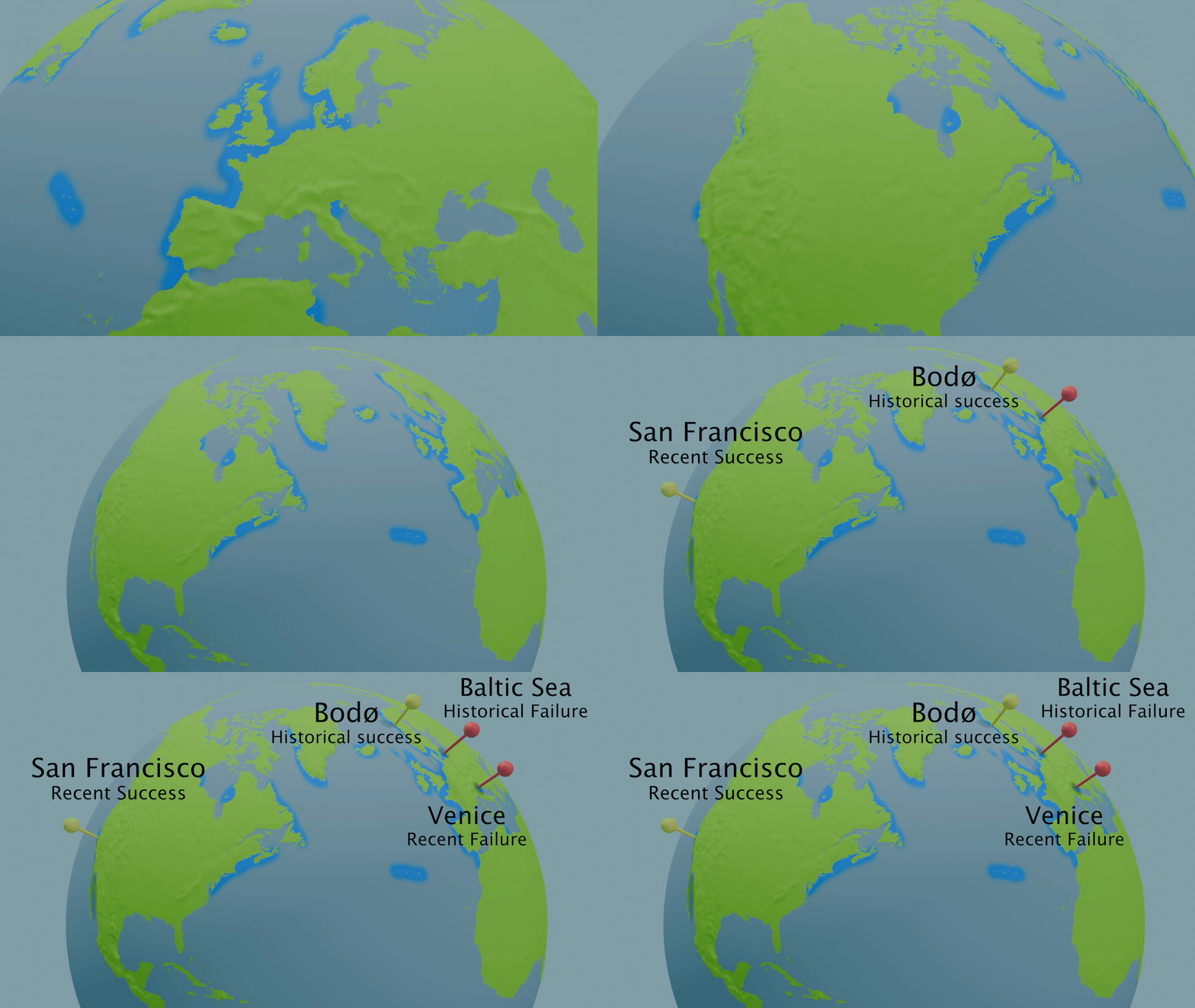
Why do some range shifts succeed while others ended in a fiasco?
Anthropogenic disturbances and climate changes can lead to rapid population declines, shifted geographic distributions, or adaptation to new conditions. The drivers and implications of this disparity in species’ responses remain puzzling. We explore the evolutionary mechanisms underlying range shifts by contrasting naturally replicated dispersal events in a marine snail. We leverage multidimensional information from whole genomes including chromosomal structural variants, phenotypic traits, and local habitats to clarify why some range shifts succeeded while others ended in a fiasco, advancing our understanding of the drivers of ecological success.
These findings will contribute to the urgently needed improvement of knowledge of the fundamental mechanisms that originate and maintain biodiversity to inform effective actions in wildlife management.
 Photo by Patrik Larsson
Objectives
Demographic history
Clarify the demographic history of L. saxatilis, including the number of introductions and colonization routes.
Patterns of Success
Explore changes in genomic, phenotypic, and environmental patterns between failing and successful introductions, and identify signatures of diversity loss, genetic load, and accelerated adaptation.
Genetic Dynamics
Investigate how demographic fluctuations and recombination rate impact selection efficiency and accumulation of genetic load in independent populations.
Expansion Drivers
Elucidate the role of potential factors such as evolutionary background, chromosomal rearrangements, and adaptations that may have contributed to population expansion or extinction.
Acknowledgment
The FIASCO project "Illuminating range shifts through evolutionary FIASCO:contrasting FaIling And Successful ColOnizations in replicated wild populations" has been funded by the European Union - Next Generation EU (Piano Nazionale di Ripresa e Resilienza - MUR code: P202229JBC, CUP: C53D23007100001)).
Our participation to PopGroup58 was supported by the Genetics Society Conference Grant Scheme A (Genetics Society Meetings and SIGs) - 2024.
Collecting snails in protected areas in the United Kingdom was permited with Natural England Consent 1706241719FG, and 1005240720JC, and general sampling consent to RSPB Snettisham.
Sampling in Denmark was supported by "University of Gothenburg teachers fund for travels”.